Soloheat Industry Quick Facts provides practical industrial heating technical information for engineers, designers and maintenance professionals. Our growing collection of technical guides covers the selection, specification, installation and performance of industrial electric heating elements.
Browse the Quick Facts below for practical engineering guidance on cartridge heaters, cast heaters, ceramic and mica heaters, thermocouples and other industrial heating applications. Each topic links to further technical information where available.
INDUSTRY QUICK FACTS # 3
⚡ Cartridge Heater Wattage Guide – More Watts Isn’t Always Better
- Higher wattage doesn’t necessarily mean better heating.
- The correct cartridge heater wattage depends on several factors, including the mass being heated, heat losses, required operating temperature, heat-up time and available heating surface area.
- Selecting excessive wattage can result in unnecessarily high element temperatures. More importantly, the watt density (W/cm²) of the cartridge heater needs to be appropriate for the application. Excessive watt density can reduce heater life and increase the risk of premature failure.
- 🔧 Engineering Tip:
Good heater selection balances total wattage, watt density and heat transfer. Don’t select a cartridge heater on wattage alone.
Related: Cartridge Heaters →
Need a bespoke heater? Get a quotation →
INDUSTRY QUICK FACTS #2
📐 Cartridge Heater Fit & Bore Size
- Cartridge heaters should be fitted into a correctly sized, accurately machined bore
- A close fit improves heat transfer from the heater into the surrounding component
- Oversized or poorly finished bores can create air gaps, reducing heating efficiency and heater life
- For high-performance applications, the heater diameter, bore tolerance, length and watt density should all be considered together
Related: Cartridge Heaters →
Need a bespoke heater? Get a quotation →
INDUSTRY QUICK FACTS #1
Heater Watt Density
- Watt density describes how much electrical power is applied to a given heating surface
- It is usually expressed as W/cm² or W/in²
- Higher watt density isn’t automatically better
- The correct value depends on the material being heated, operating temperature, heat transfer and available heater surface area.
Related: Cartridge Heaters →
Need a bespoke heater? Get a quotation →
Soloheat Electric Heating Element Solutions – Quick Links
That’s some facts for thought, now take a look at our heating solutions:
- Cast Aluminium / Aluminium Bronze Heaters
- Ceramic Band Heaters
- Mica Band Heaters
- Cartridge Heaters
- Nozzle Heaters
- Spiral Wrap Heaters
- Thermocouples, Sensors, Plugs & Cables
- Tubular & Immersion Heaters
- Ancillary Items
- Insulation Jackets
- Heated Hoses
![]()
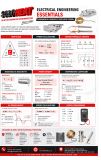
For more information on Electric Engineering Principles, check out our Engineering Guide